Troubleshooting • Updated Feb 20, 2026 • 12 min read
How to fix a slow drain safely (renter edition)
 By Michael Rivera · Updated Feb 20, 2026
Your drain is slow. Before you reach for a bottle of chemical drain cleaner—don’t. That’s the single most common mistake I see renters make, and I’ve watched it turn a $0 fix into a $400 plumbing call more times than I can count. Most slow drains are just hair and soap buildup (in bathrooms) or grease and food particles (in kitchens). The fix is usually free and takes ten minutes.
This guide sticks to low-risk methods. If multiple drains are slow at once or you smell sewer gas, skip everything below and call maintenance—that’s a building plumbing issue, not a clogged drain.
I’ve been doing property maintenance for over twelve years now, and the pattern is always the same: someone notices the water pooling around their ankles in the shower, ignores it for a week, then panics and dumps a bottle of Drano down the pipe. By the time I show up, the chemical has been sitting in a partial clog generating heat, and now we’ve got a softened PVC joint on top of the original hair ball. So let’s skip that whole cycle. Here’s what actually works.
Quick diagnosis (30 seconds)
| What you observe | Most likely | What to do |
|---|---|---|
| Only the tub/shower is slow | Hair + soap scum | Hair tool + hot water flush |
| Only kitchen sink is slow | Grease/food buildup | Dish soap + hot water + plunger |
| Two drains slow at same time | Shared line issue | Stop and call maintenance |
| Gurgling + sewer smell | Vent / partial blockage | Stop and call maintenance |
| Water backs up elsewhere | Main line | Stop and call maintenance |
Tools & supplies (renter-safe)
- Plastic hair tool (tub/shower) — the best ROI tool.
- Rubber gloves + paper towels / trash bag.
- Plunger (use a clean sink plunger; toilet plungers are shaped differently).
- Dish soap (helps with grease).
- Flashlight for under-sink inspection.
- Optional: small bucket and towel (to catch drips under the sink).
What to avoid (common renter mistakes)
- Mixing chemicals (dangerous fumes).
- Overusing harsh drain cleaners (can damage pipes and finishes).
- Forcing a cable/snake aggressively (can scratch or dislodge parts).
About drain cleaners (why landlords hate them)
Many “instant” drain cleaners are caustic and can heat up inside pipes. In rentals that can mean damaged finishes, softened PVC, or a bigger leak later. If your building has older plumbing, the risk is even higher. If you use any product at all, follow the label, never mix products, and stop if the drain doesn’t improve quickly.
Safe step-by-step checklist
- Remove the stopper/strainer and clean visible gunk.
- Use a plastic hair tool for tubs/showers (cheap and effective).
- Hot water flush (not boiling on fragile fixtures): run hot tap water for 2–3 minutes.
- Dish soap + hot water for kitchen sinks (helps with grease).
- Plunger (cover overflow if present; use short firm plunges).
Step-by-step details (so it actually works)
Tub/shower: hair tool method
- Remove the stopper if possible (many pop-up stoppers unscrew; don’t force).
- Insert the plastic hair tool slowly, rotate gently, and pull out.
- Repeat until you pull out little/no debris.
- Flush with hot water for 2–3 minutes.
- Test by running the shower at full flow for 60 seconds.
Kitchen sink: grease/food method
- Run hot tap water for 30 seconds to warm the pipe.
- Add a good squirt of dish soap directly into the drain.
- Run hot water for another 2–3 minutes.
- Plunge: fill the sink with enough water to cover the plunger cup, then plunge with short firm pumps.
- Re-test and repeat once if you see improvement.
If you have a garbage disposal
- Smell + slow drain often means residue. Start with hot water + dish soap flush and clean the splash guard (see under-sink smell checklist).
- Don’t grind fibrous foods (celery, corn husks) or grease — they build up and slow the drain.
- If it hums but doesn’t spin, stop and call maintenance (don’t open or disassemble in rentals).
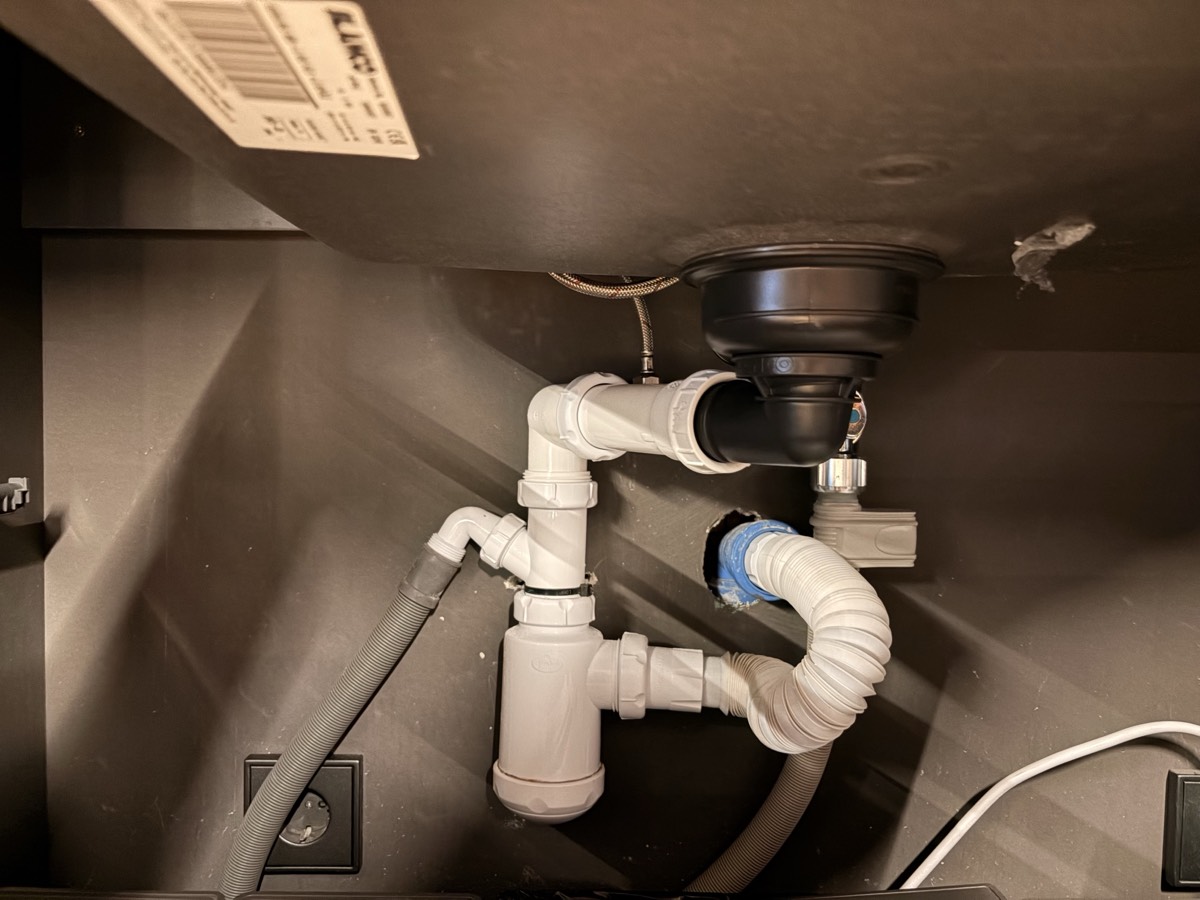
Quick under-sink check (no disassembly)
- Look for leaks: moisture, drips, or water marks around the P-trap and connections.
- Check the cabinet floor: swelling or dark stains are “report early” signs.
- Smell test: a sewer smell near pipes can indicate a venting issue or trap problem—don’t ignore it.
How to plunge the right way (most people do it wrong)
- Seal matters: the plunger cup must fully cover the drain opening.
- Use enough water: you need water to create pressure. A “dry plunger” doesn’t do much.
- Cover the overflow (bathroom sink/tub): use a wet washcloth to block the overflow opening so pressure goes into the pipe.
- Short firm strokes: 10–20 pumps, then release and test.
- Stop if you see leaks under the sink while plunging (pressure can expose weak connections).
Fixture-specific notes
Bathroom sink
- Pop-up stoppers catch hair and toothpaste residue. Cleaning the stopper assembly (without disassembly) often helps.
- Overflow channel can smell and slow drainage if it’s gunked up; rinsing with warm soapy water can help.
Double kitchen sinks
- If one side has the disposal, the clog can be in the shared trap. If you see water backing up into the other basin, that’s a clue.
- Plunge one basin at a time while keeping the other drain sealed (wet rag) to focus pressure.
Dishwasher connection (kitchen)
- If the sink is slow, the dishwasher may back up or drain poorly. That’s another reason to avoid harsh chemicals.
- If you see water under the sink near the dishwasher hose connection, stop and call maintenance.
I’ll share a quick story that illustrates why the simple stuff matters. A few years ago, a tenant in one of my buildings put in a work order for a “completely blocked” kitchen sink. When I got there, she’d already tried two different chemical drain cleaners (mixed, which is dangerous—please don’t do that). The sink was full of standing chemical water, and I couldn’t even plunge safely without risking splash-back. We had to call a plumber to pump it out before we could do anything. The actual clog? A buildup of grease around a small piece of a produce sticker that had gone down the drain. A thirty-second dish soap and hot water flush a week earlier would have prevented the whole thing. The plumber bill was $380.
Signs it’s not “just a clog”
- Gurgling after the water stops: can indicate venting problems or partial blockages deeper in the line.
- Multiple fixtures affected: building line issue is likely.
- Intermittent slow + sewer smell: possible trap/vent issue—maintenance ticket.
Prevention (what actually prevents repeat clogs)
- Use a hair catcher in tubs/showers.
- Weekly hot-water flush for kitchen sinks after cooking (no boiling water on fragile fixtures).
- Grease rule: wipe pans with a paper towel before washing.
- Don’t use the disposal as a trash can: scrape food into the bin first.
Optional: photo checklist (for your ticket)
- Short video showing the slow drain (10–15 seconds).
- Under-sink wide shot (shows plumbing layout).
- Close-up of any moisture around the P-trap or connections.
- Notes: which fixture, when it started, and whether other drains are affected.
"Stop here" signs (call maintenance)
- Water backs up into another drain (possible main-line issue).
- Gurgling + sewer smell.
- Repeated clogs within days.
- Any leak under the sink after attempts.
Maintenance request template (copy/paste)
Subject: Slow drain in [kitchen/bathroom] (possible line issue)
Hi [Landlord/Maintenance], the [kitchen sink / tub / bathroom sink] drain has been slow since [date]. I tried low-risk steps (cleaned strainer/stopper, hot water + dish soap, plunging) and it’s still slow. There is [no visible leak / a small drip under the sink]. Could you please inspect and clear the line? I can share photos/video and I’m available [times]. Thank you.
Was this guide helpful? Have a correction or tip? Email [email protected].
Renter for 15+ years. I write practical, landlord-safe fixes I've actually done in my own apartments — no permits, no drama, deposit intact. More about me →