Doors • Updated Jun 28, 2026 • 7 min read
The bent door handle my previous tenants left me (and the $5 fix that prevents it)
 By Michael Rivera · Updated Jun 28, 2026
Every rental comes with one mystery gift from the previous tenants. In my current place it was the bedroom door handle: a lever bent visibly upward, like someone had tried to chin-up on it. It still turned, barely, but you could feel the mechanism grinding, and the lever kept creeping looser week by week.
The actual culprit wasn't the previous tenants' gorilla grip. It was what was missing from the room: a door stop. Nothing stopped that door from swinging wide open, so for years the handle had been the thing hitting the wall. Every single time. The handle was the crumple zone.
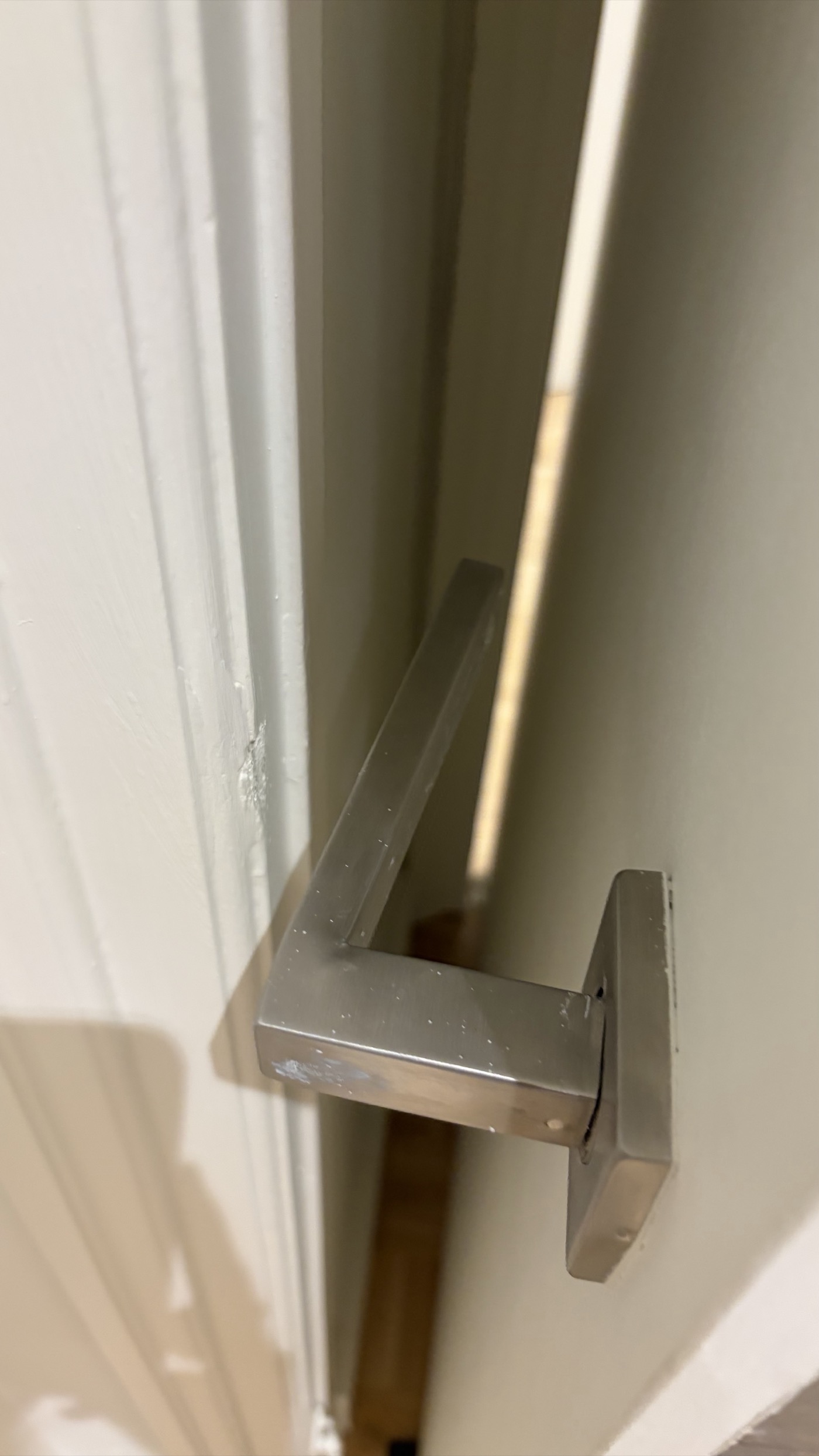
Diagnosing: bent lever vs. broken mechanism
Before buying anything, work out what's actually damaged, because the fix (and whose job it is) changes:
- Lever bent, but latch clicks fine when you press it with a finger → cosmetic-plus damage; a handle swap fixes it. That was my case.
- Latch doesn't retract or spring back → the mortise mechanism inside the door is worn or broken. That's a lock repair — report it to the landlord rather than DIYing it.
- Handle spins freely without moving anything → the spindle (the square bar through the door) is stripped or snapped. Cheap part, but pull the handle off first to confirm before ordering.
The swap (15 minutes, two screws… in theory)
- Unscrew the old handle plates on both sides of the door. Mine had paint over one screw head — a utility knife around the edge saved the screwdriver slot.
- Pull both halves off with the spindle. Keep everything in a labeled zip bag. This matters at move-out: worst case, you reinstall the bent original and nobody can say a word.
- Measure before buying: the spindle size and the screw-hole spacing (center to center). Take the old handle to the store if in doubt — "close enough" isn't a thing here.
- Fit the new one and tighten in stages: all screws loose first, check the latch moves freely, then snug them evenly. Overtightening one corner first is how you get a handle that binds.
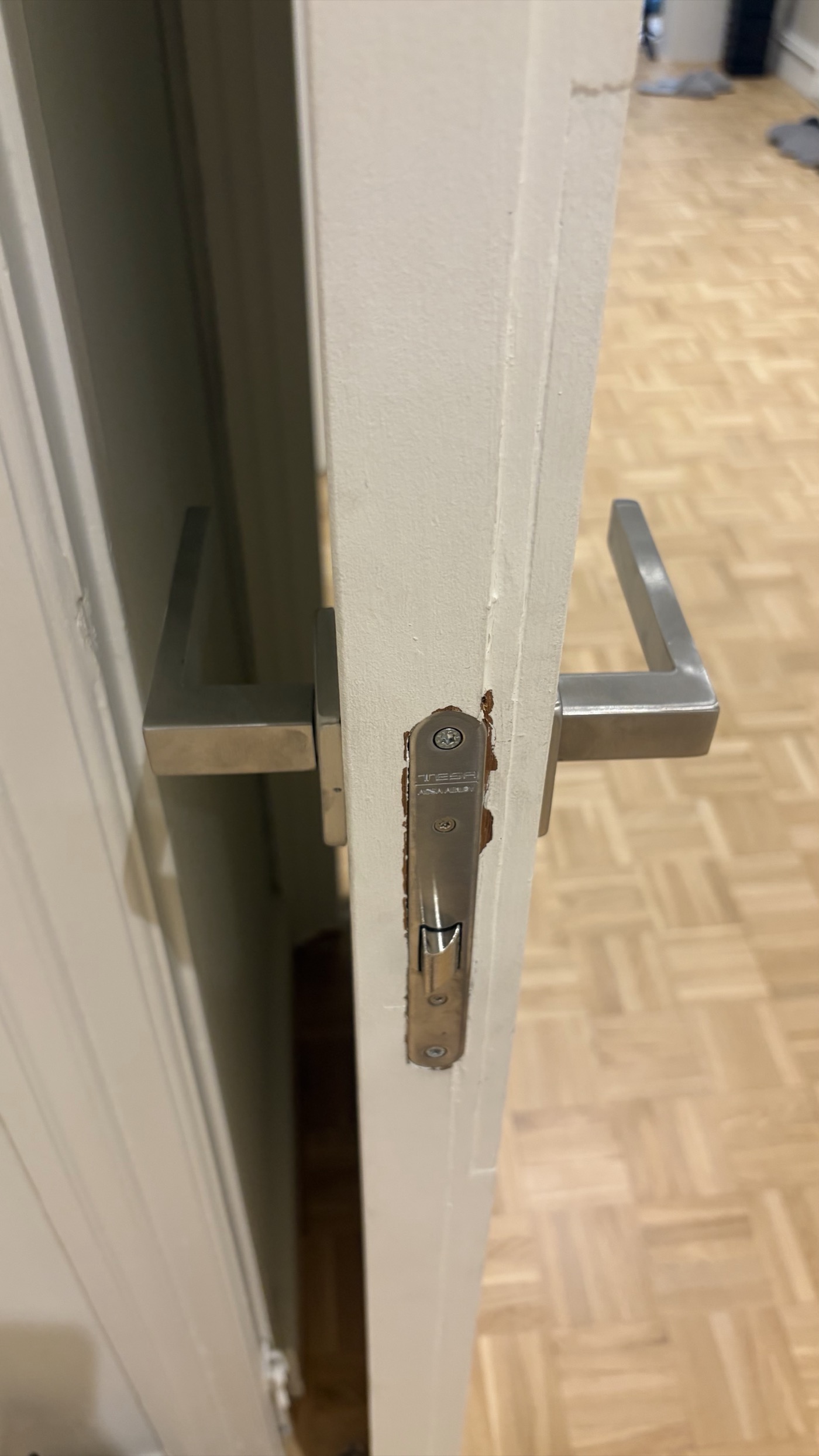
The part everyone skips: stop the cause
Swapping the handle without adding a door stop is just enrolling the new handle in the same abuse program. The wall behind my door already showed the history — a shallow dent in the wood paneling exactly at handle height.
I went with a magnetic floor stop: a small dome that screws into the floor and a catch plate on the door. It stops the door an inch before the wall, and the magnet holds it open — which turns out to be the feature you didn't know you wanted (no more doors slamming shut with a draft).
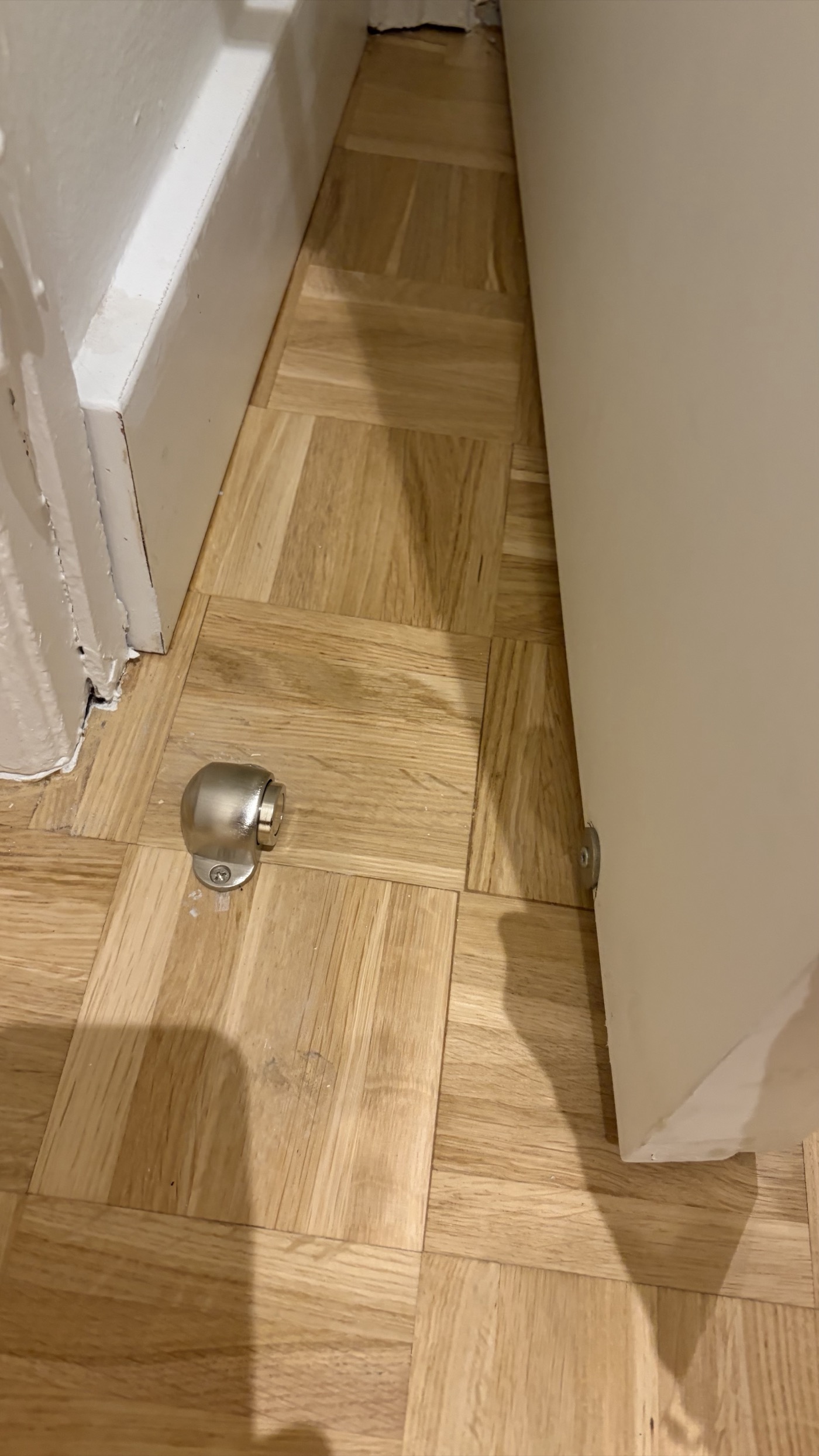
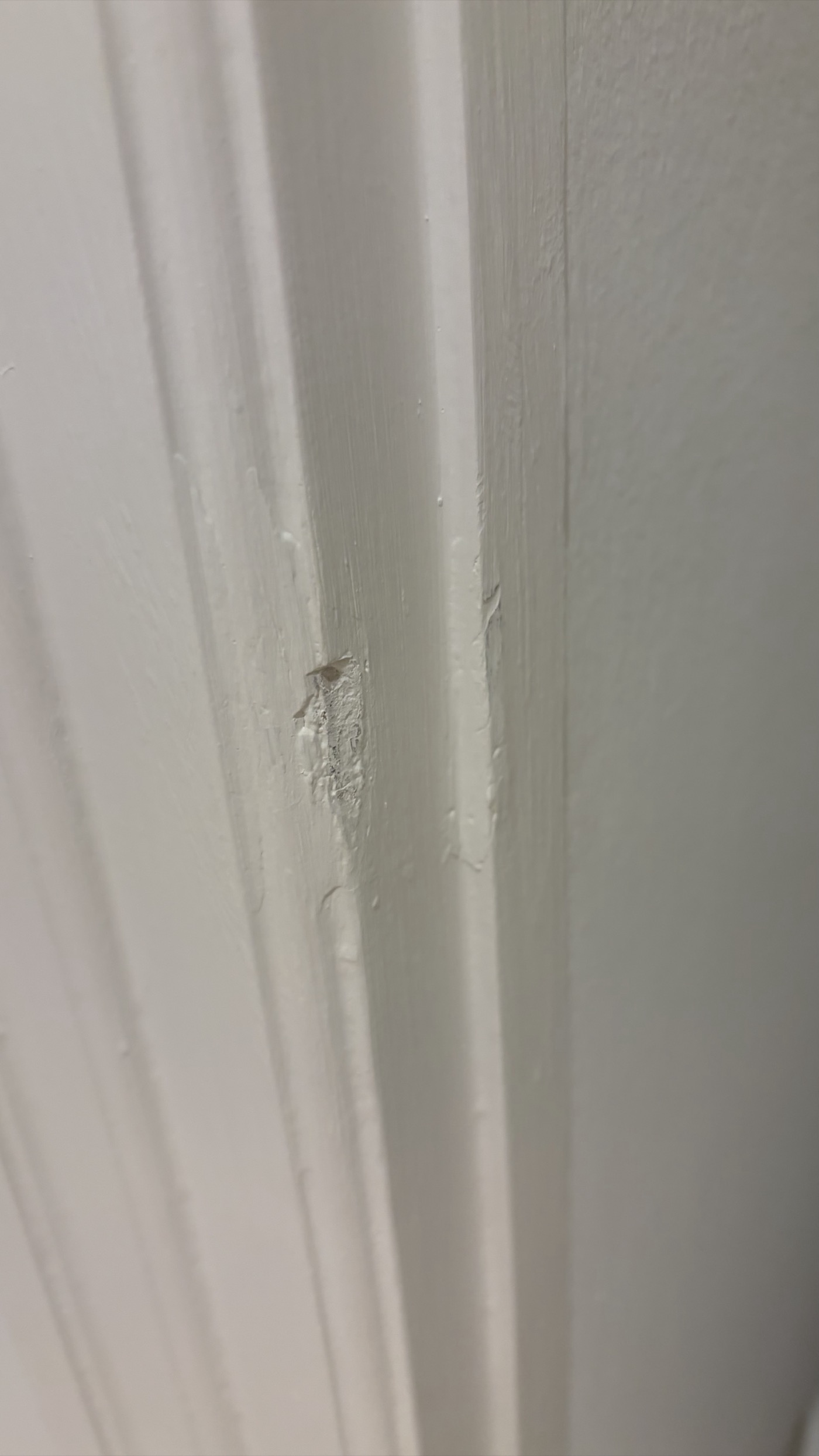
Renter note on drilling floors: one small screw into a wooden floor is the kind of thing most landlords approve with a one-line message ("Adding a door stop to protect the wall — OK?"). Send it, get the "sure," keep the screenshot. On tile or under-floor heating: use an adhesive stop instead, no drilling.
FAQ
Can I replace a door handle in a rental without asking?
A like-for-like swap is reversible — keep the original in a labeled bag and reinstall at move-out if needed. If the lock mechanism itself is broken, report it instead.
Why do rental door handles end up bent?
Years of the door swinging into the wall with nothing to stop it. The handle takes the hit every time and slowly folds at the neck.
Do magnetic stops damage the floor?
One small screw on wood (ask first, it's a one-line yes). On tile, use the adhesive version.
Was this guide helpful? Have a correction or tip? Email [email protected].
Renter for 15+ years. I write practical, landlord-safe fixes I've actually done in my own apartments — no permits, no drama, deposit intact. More about me →