Doors • Updated Jun 14, 2026 • 6 min read
Replacing an antique door handle that stopped working (without ruining an old door)
 By Michael Rivera · Updated Jun 14, 2026
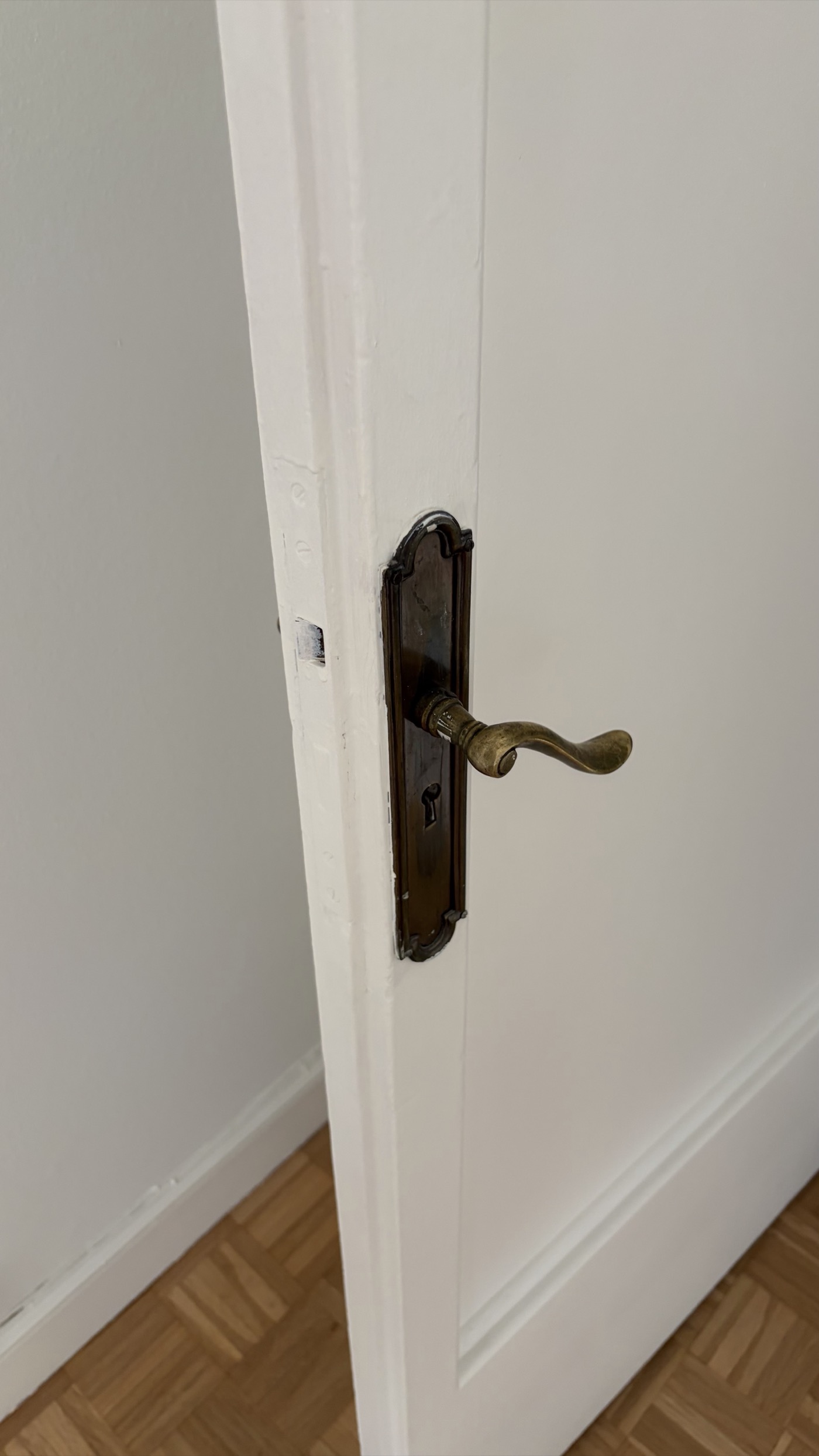
Old apartments come with old doors, and old doors come with hardware that predates everyone in the building. The brass lever on one of mine was genuinely pretty — curved, worn to a warm patina, the kind of thing you'd see in a flea market and consider buying. It also, at some point this spring, simply stopped doing its one job. You'd press it down and the latch would respond late, or halfway, or not at all. Getting out of the room became a two-hand negotiation.
Why old handles die (and why it's usually not the handle)
On doors like this the handle connects through a square spindle to a mortise lock buried inside the door. A century of use wears three places: the spindle hole in the handle goes round (so the lever turns without turning the spindle), the spring inside the mortise weakens (so the latch doesn't push back out), or the whole mechanism gums up with decades of paint and dust.
Quick test: take the handle off and turn the spindle directly with pliers. If the latch moves crisply, the mortise is fine and a new handle solves it — that was my case. If the spindle itself feels dead, the mortise lock needs work, and on a rental that's a report-it job.
Choosing a replacement that respects the door
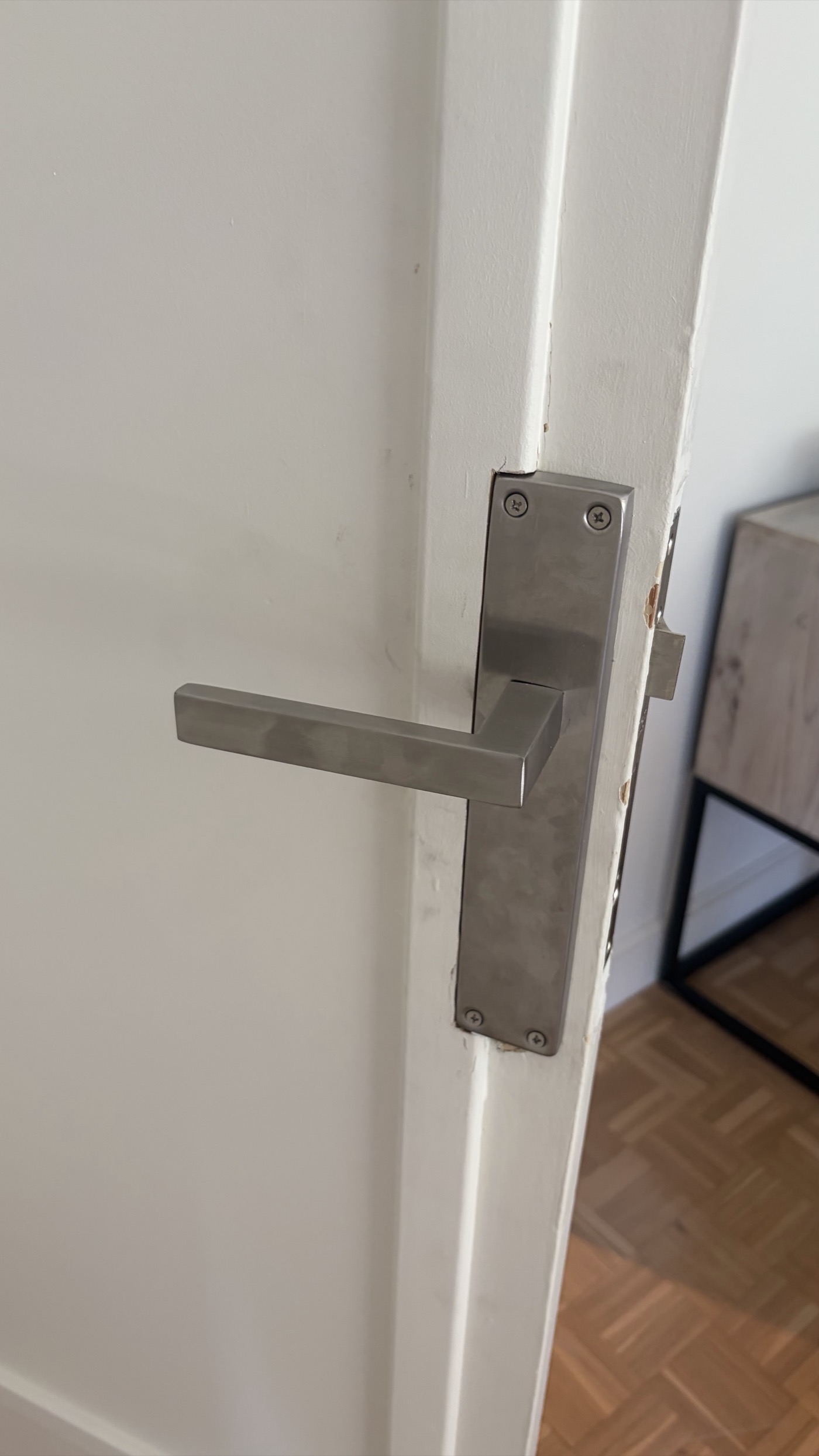
- Long backplate, not rosettes-only: the old plate left a tall footprint and a keyhole. A modern handle on a long plate covers all of it — no shadow lines, no exposed holes, nothing to explain at move-out.
- Match the spindle: old doors often carry non-standard spindle sizes. I took the old handle to the hardware store instead of guessing.
- Keep the finish coherent: I went brushed steel to match the rest of the flat's newer hardware. If your building leans historic, brass-look modern hardware exists too.
The detail that makes it look professional: the trim plates
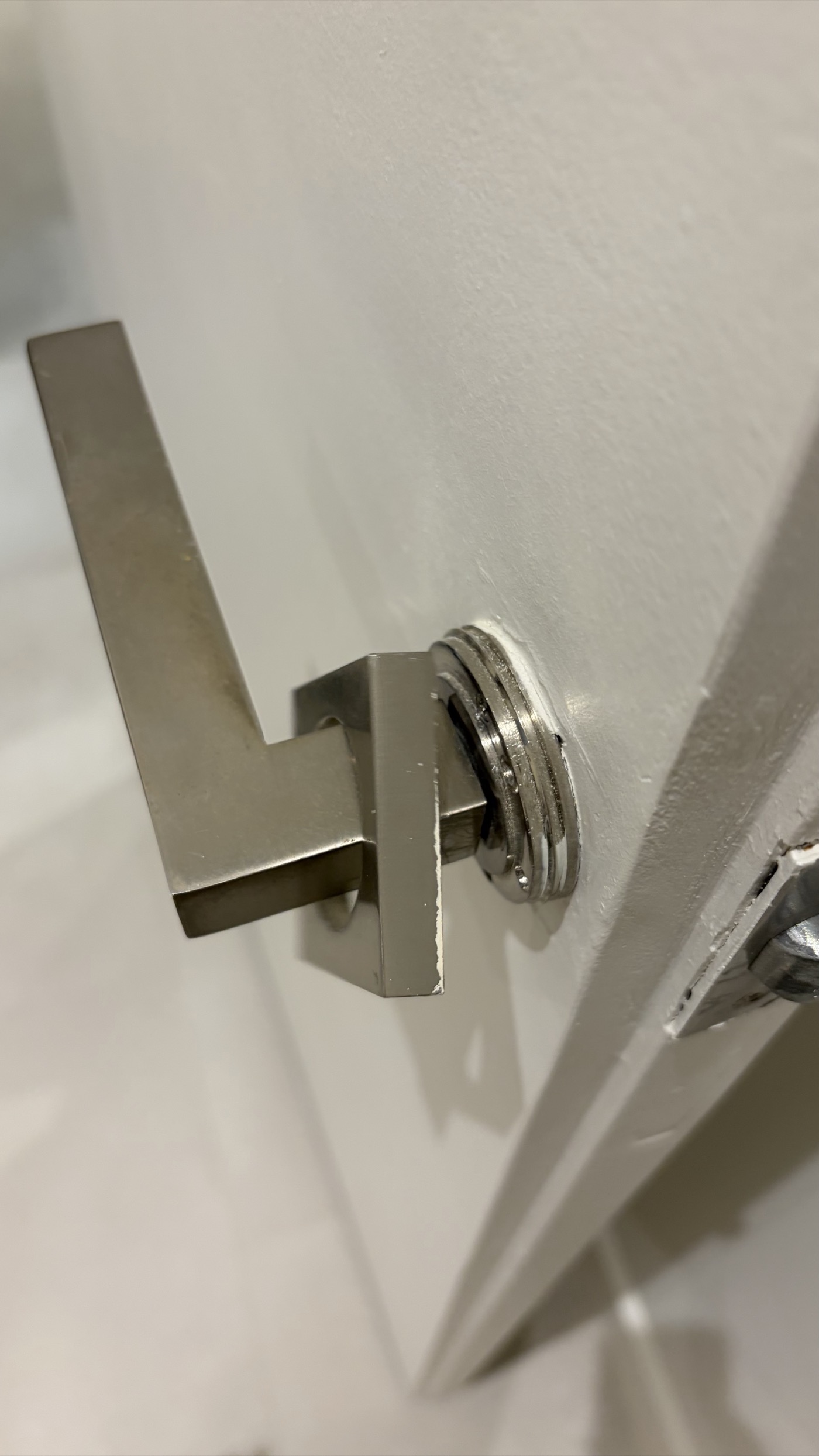
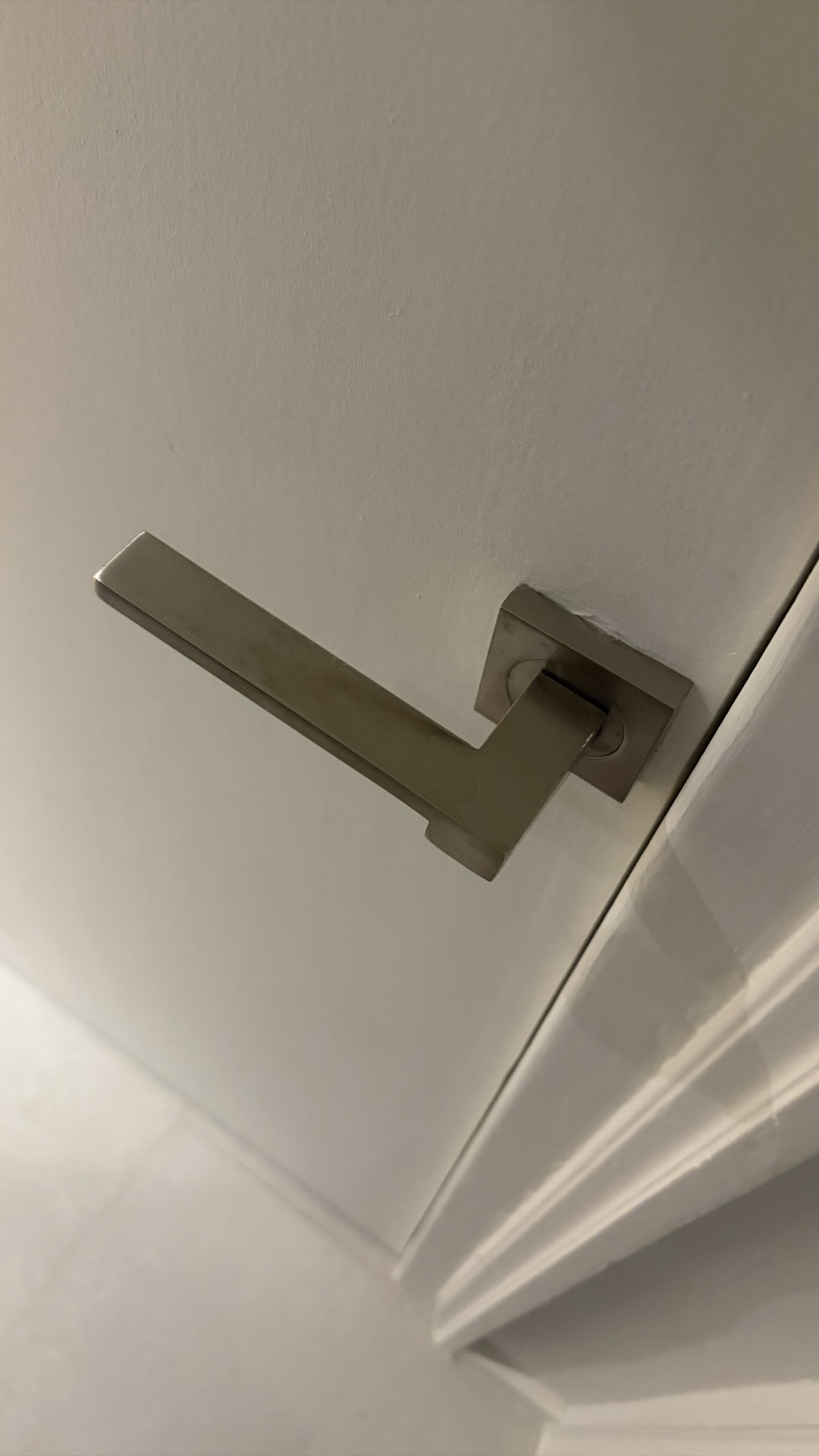
Handles on old doors usually come loose not at the lever but at the plates and rosettes — because the new screws go into old, chewed-up screw holes and never really bite. The fix costs nothing: pack each old hole with two or three wooden toothpicks and a drop of wood glue, snap them flush, let it set ten minutes, then drive the screws. They grip like fresh wood.
Move-out insurance: the original brass handle went into a zip bag, labeled, into the closet. Old-building owners sometimes care a lot about original hardware — offering it back intact turns a potential deposit argument into a good impression.
FAQ
Should I keep the original antique handle?
Always. Bag it, label it, offer it back or reinstall at move-out. Original hardware can matter to owners of older buildings.
Will a modern handle fit an old mortise lock?
Often yes — if the spindle matches and the new plate covers the old footprint. Measure both before buying.
Why do trim plates keep loosening?
Old oversized screw holes. Toothpicks + wood glue in the hole, then re-drive the screws.
Was this guide helpful? Have a correction or tip? Email [email protected].
Renter for 15+ years. I write practical, landlord-safe fixes I've actually done in my own apartments — no permits, no drama, deposit intact. More about me →