Bathroom • Updated Jun 25, 2026 • 8 min read
I installed a glass shower screen in my rental — here's the landlord conversation first
 By Michael Rivera · Updated Jun 25, 2026
Our bathroom came with a proper walk-in shower tray, nice tiling, a decent rain head on a rail — and nothing whatsoever between the shower and the rest of the room. No screen, no curtain, not even the ghost of an old rail. Every shower ended with a small lake reaching toward the toilet, and the bath mat had the life expectancy of a mayfly.
This is the one project on this site that is not a quiet, reversible fix. A fixed glass panel gets drilled into tile and siliconed in place. It's a permanent improvement to someone else's property — which means the order of operations matters: conversation first, drill second.
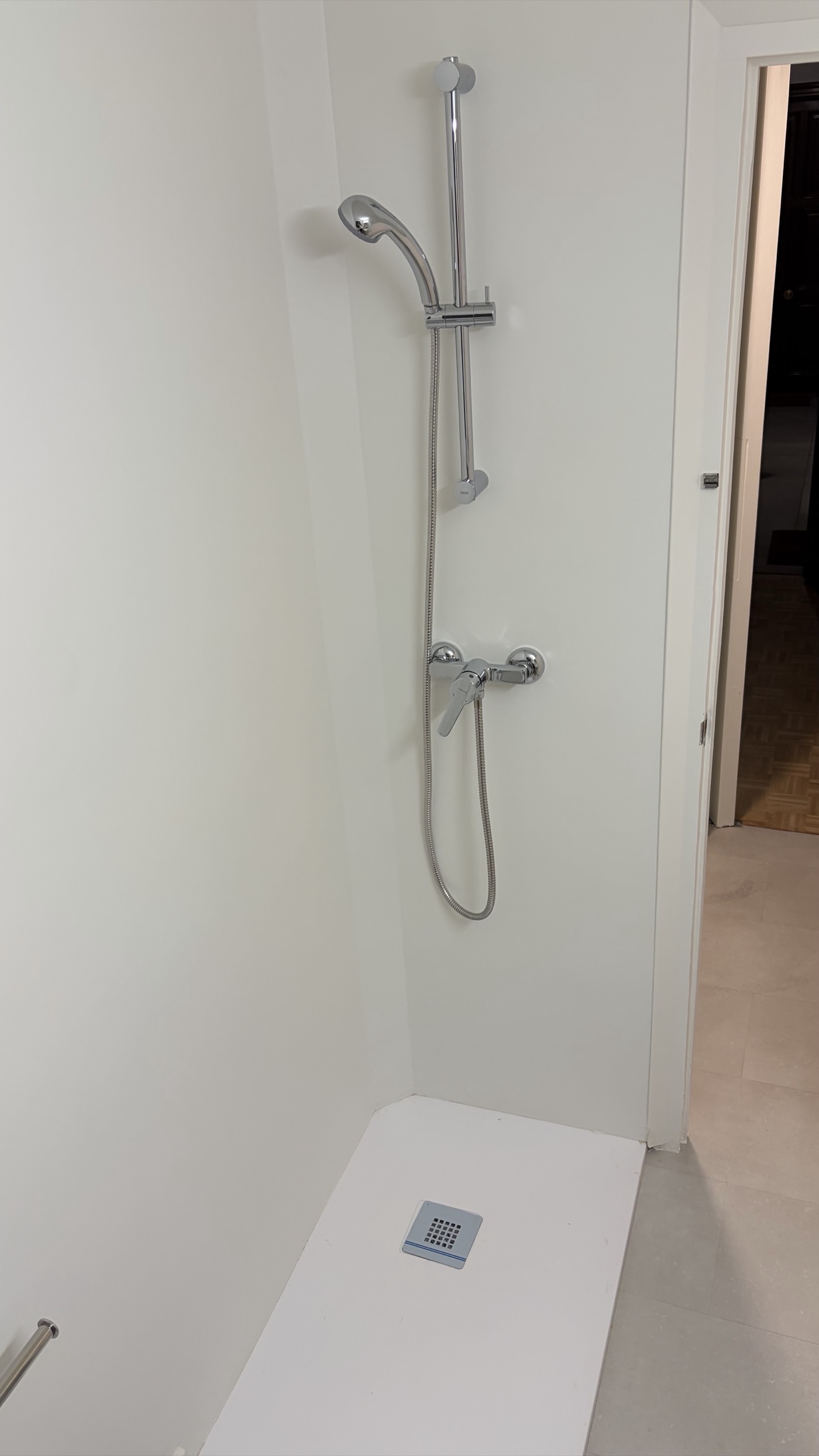
The landlord pitch (copy this)
I sent a three-line message, roughly: "The shower has no screen and water spreads across the floor every use — long-term that's bad for the tile joints and the wall base. I'd like to install a fixed glass panel, professionally sized, at my cost. It stays with the apartment when I leave. OK for you?"
Notice what that message does: it frames the problem as protecting their property (standing water, joints, wall base), offers an upgrade at no cost to them, and pre-answers the ownership question. I had a written "yes, thanks" within the hour. Keep that message — it's your permission slip.
If the landlord says no: the reversible fallback is a floor-to-ceiling tension rod with a weighted curtain. No holes, moves out with you. Less pretty, but it solves 80% of the water problem.
What the install actually involved
- Measuring twice, ordering once. Fixed panels are sized to the tray. Mine needed the width that leaves a walk-in gap you can actually walk through with elbows.
- Wall profile first: the aluminum U-profile gets leveled and drilled into the tile line. Drilling tile is the point of no return — this is why the written OK exists.
- Glass in, shims, level, silicone. The panel sits in the profile, gets leveled with plastic shims, then silicone seals the vertical joint and the bottom edge on the outside only (inside stays open so water drains back to the tray — the installer was insistent about this and he was right).
- 24 hours of nobody touching it while the silicone cures. Hardest part of the whole project.
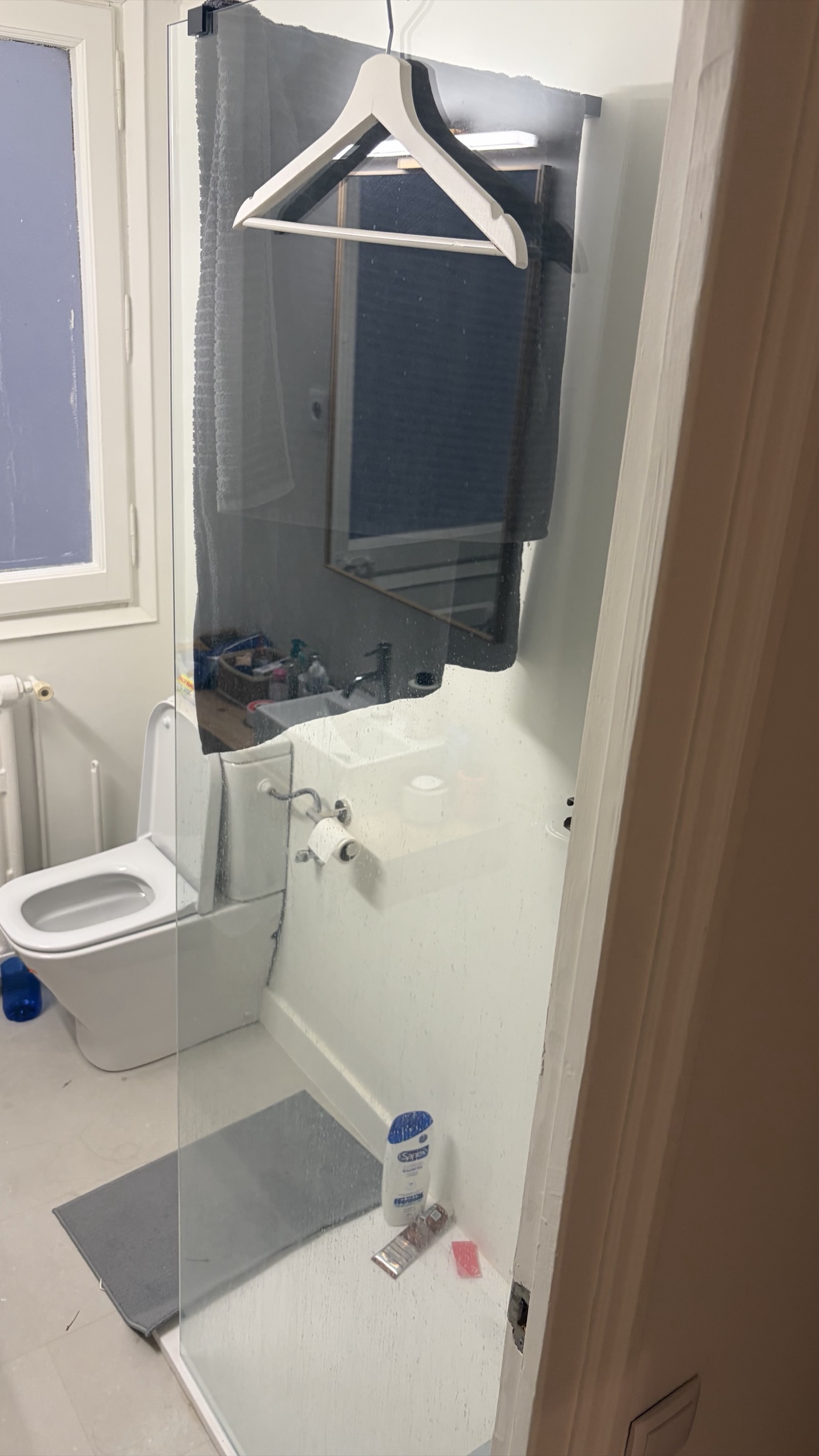
What I'd do differently
Two things. First, I'd order the glass with the easy-clean coating from the start — the uncoated panel water-spots fast, and now I own a squeegee and a hard-water routine I could have half-avoided. Second, I'd photograph the bare wall before the profile went up, for the same reason you photograph everything in a rental: the move-out file.
FAQ
Can a renter install a shower screen without permission?
Not a fixed panel — drilled and siliconed means permanent alteration. Written approval first. It's an upgrade, so a yes is common.
Who owns the screen at move-out?
Agree it in writing beforehand. Usual deal: it stays with the apartment; sometimes the landlord chips in.
No-drill alternative?
Floor-to-ceiling tension rail with a weighted curtain. Zero holes, fully reversible.
Was this guide helpful? Have a correction or tip? Email [email protected].
Renter for 15+ years. I write practical, landlord-safe fixes I've actually done in my own apartments — no permits, no drama, deposit intact. More about me →