Heating • Updated Jul 2, 2026 • 9 min read
Boiler showing 0.1 bar and an error? The renter-safe repressurize fix
 By Michael Rivera · Updated Jul 2, 2026
I moved into my current place in early summer, which means I did what every renter does: checked that the shower ran hot for thirty seconds and never thought about the boiler again. Big mistake. The first genuinely cold morning, the radiators stayed dead, the water ran cold, and the boiler — a wall-hung Baxi combi — greeted me with a glowing 0.1 bar on the display and a little error symbol.
If you're staring at the same thing right now: this is, most of the time, the single most common and most fixable boiler problem there is. The system is low on water pressure. No pressure, no circulation, no heat — and modern boilers lock themselves out on purpose until you fix it.
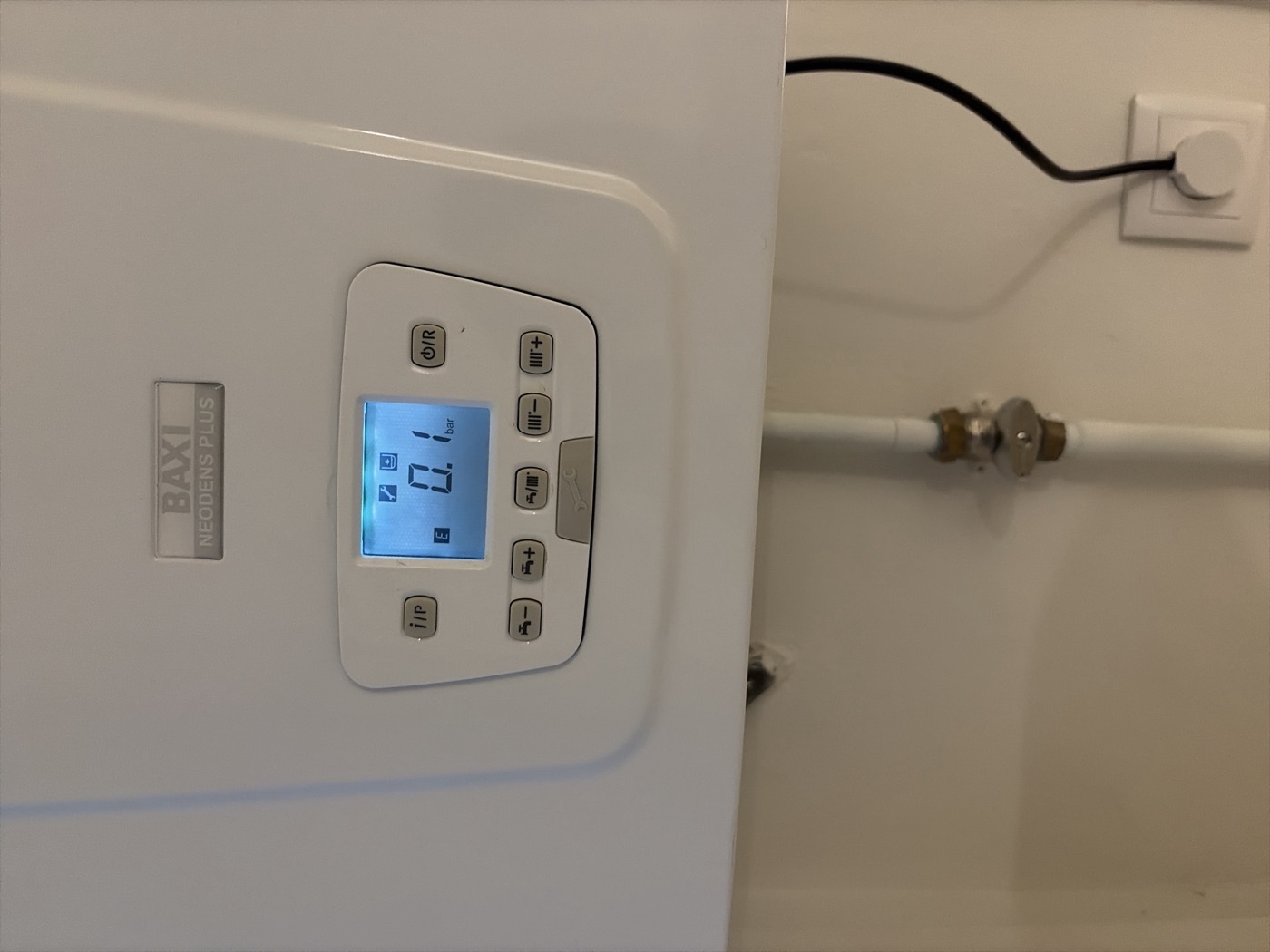
First: what the number means
A sealed heating system needs to be pressurized to move hot water through the radiators. Most combi boilers want 1 to 1.5 bar when cold. Over months, tiny amounts of water and air escape — through radiator bleeds, micro-leaks, evaporation at joints — and the pressure slowly sags. Eventually it crosses the boiler's cutoff line and the unit locks out.
One top-up a year (usually at the start of heating season) is normal life with a sealed system. It's the boiler equivalent of topping up tire pressure.
The renter-safe part: know your line
What you can do: top up pressure using the filling loop, and restart the boiler from its front panel. Both are user operations, described in the user manual.
What you should never do: open the boiler casing, touch anything on the gas side, or attempt internal repairs. That's certified-technician territory, and in most rentals it's also legally the landlord's job.
How I brought mine back (step by step)
- Find the filling loop. Under the boiler there's usually a small valve or a braided flexible hose with one or two taps connecting the cold water supply to the heating circuit. Mine was a built-in valve under the casing — the manual (searchable online by model name) shows exactly where.
- Watch the display, not the clock. Open the valve slowly. You'll hear water hissing in, and the pressure reading starts climbing: 0.3… 0.6… 0.9…
- Stop at ~1.2 bar. Close the valve firmly when the display reads between 1 and 1.5 bar. Don't chase 2 bar "to be safe" — overpressurizing just makes the relief valve dump water later.
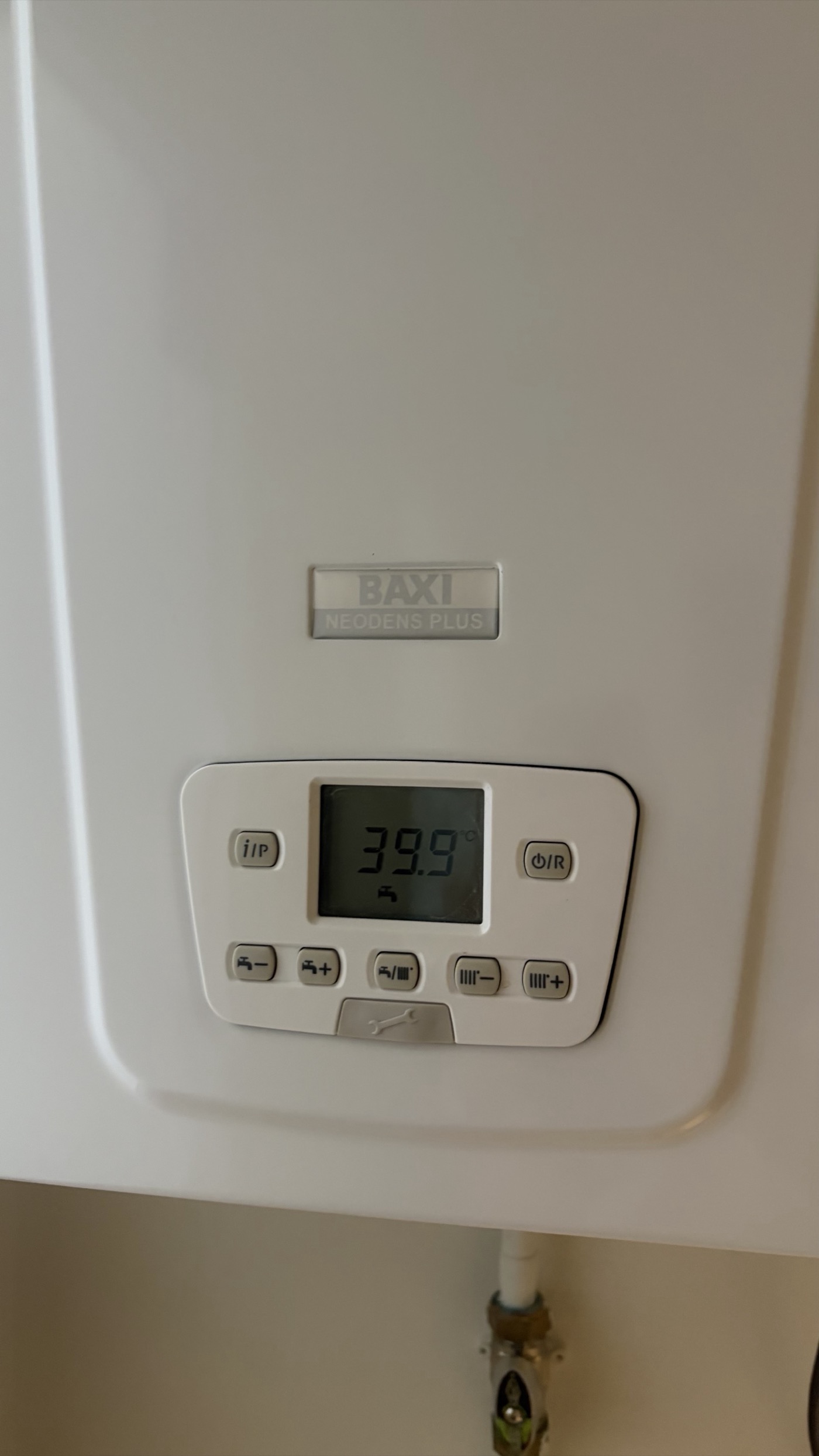
- Reset the boiler. Press the reset/restart button on the panel (on my Baxi it's the ⏻/R button). The error cleared immediately.
- Ask for heat. Turn on a hot tap or nudge the thermostat up. You should hear the burner fire.
When this is NOT your fix
- Pressure drops again within days. One top-up a season is normal. One a week means the system is leaking somewhere — radiator valve, hidden pipe, internal part. That's a repair. Photograph the display each time it drops and send the log to your landlord.
- You see water under the boiler. Don't top up on a loop; report it.
- The error isn't pressure-related. If the display shows normal pressure (1+ bar) but still errors out, look up the specific error code in the manual and report that code — it saves the technician a diagnostic visit.
- You smell gas. Stop everything, ventilate, don't flip switches, and call the gas emergency line. Not the landlord first — the emergency line.
The two-minute habit that avoids the cold shower
Glance at the boiler display once a month, the same way you'd glance at a fuel gauge. If you see it trending down — 1.4, then 1.1, then 0.8 over a few months — top it up on a Saturday afternoon on your terms, instead of discovering it at 7 AM in January.
Note: model specifics vary. The manual for your exact boiler (free PDF, search the model name on the front) overrides anything written here. And if your rental agreement says "don't touch the boiler," that clause wins — send the landlord the photo of the display instead.
FAQ
What pressure should a combi boiler show?
Cold, roughly 1–1.5 bar. Hot, it can rise toward 2 bar. Below ~0.5 bar most units lock out.
Is repressurizing safe for a renter to do?
Topping up via the filling loop and restarting from the front panel is normal user operation, straight from the manual. Anything past that — casing open, gas side, internal parts — is technician territory.
It loses pressure every few days. Keep topping up?
No. Recurring loss means a leak or failing part. Document the readings and report it — that's a repair, not maintenance.
Was this guide helpful? Have a correction or tip? Email [email protected].
Renter for 15+ years. I write practical, landlord-safe fixes I've actually done in my own apartments — no permits, no drama, deposit intact. More about me →