Checklist • Updated Jan 12, 2026 • 12 min read
Under-sink smell checklist: P-trap, disposal, and hidden leaks
Under-sink smells usually come from moisture, food residue, or a dry P-trap. This checklist helps you narrow it down without risky DIY.
Smell types (quick identification)
| Smell | Often means | First action |
|---|---|---|
| Sewer / “rotten egg” | Dry trap, venting issue, or leak | Run water 30–60 sec in that fixture, then re-check |
| Musty / damp | Moisture, hidden leak, wet cabinet | Dry everything, take photos, check for return |
| Sour / rotting food | Disposal residue, dirty splash guard | Clean guard + hot water + dish soap flush |
| Trashy / stale | Bin/recycling area | Wash bin, replace liner, ventilate |
Fast sniff test (where is it strongest?)
- Cabinet wood / floor: musty smell often means moisture.
- Drain area: sewer-ish smell can mean P-trap issues.
- Garbage disposal: sour/rotting smell is usually residue.
Tools & supplies
- Flashlight (leaks hide in shadows).
- Paper towels (to check “is it actively wet?”).
- Dish soap + warm water.
- Microfiber cloth (drying helps you detect return moisture).
- Trash bag (for dirty liners / food residue cleanup).
P-trap basics (why it matters)
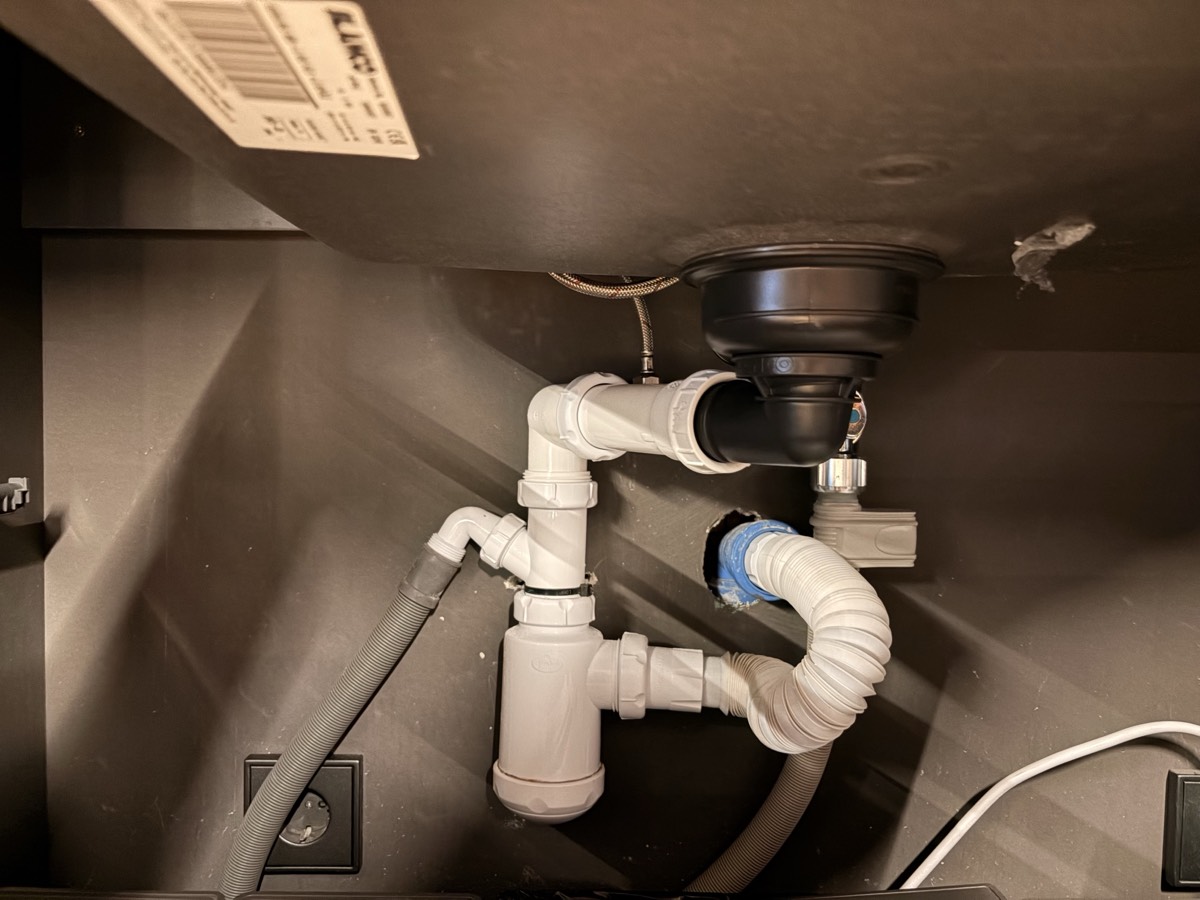
The P-trap is designed to hold water. That water seal blocks sewer gases from entering your cabinet. If the trap dries out (rarely used sink, vacation, or a small leak), odor can rise from the drain.
Checklist
| Check | What you see/smell | Next action |
|---|---|---|
| Look for moisture | Damp cabinet, swelling, dark stains | Photo + report to maintenance |
| P-trap area | Sewer smell near pipes | Run water 30–60 sec; smell improves = trap was dry |
| Disposal splash guard | Sour smell, slime | Clean guard + flush with dish soap and water |
| Trash can / recycling | Smell concentrated there | Wash bin; use liners; ventilate |
Step-by-step (low-risk)
1) Check for hidden moisture
- Remove everything from under the sink.
- Dry the cabinet completely (floor and walls).
- Wrap a dry paper towel around each visible connection (P-trap joints, shutoff valves) and wait 2–3 minutes.
- Look for damp spots. If any connection wets the towel, it’s a maintenance ticket.
1b) Overnight leak test (easy, high signal)
- Line the cabinet floor with dry paper towels (or a piece of cardboard).
- Don’t use the sink for a few hours (or overnight).
- Check in the morning: even a slow drip will show up clearly.
- If the towels/cardboard are damp, take photos and file a maintenance request.
2) Rule out a dry trap
- Run cold water for 30 seconds, then hot for 30 seconds.
- Wait 10 minutes and re-check the smell.
- If the smell returns quickly (same day), there may be a vent/seal issue: call maintenance.
2b) Where sewer smells usually come from
- Dry P-trap (most common): smell improves after running water.
- Loose connection: sewer smell + occasional dampness.
- Venting issue: gurgling sounds + sewer smell that persists.
3) Clean disposal/splash guard residue
- Safety: keep the disposal off; don’t put hands into the unit.
- Scrub the underside of the rubber splash guard with dish soap.
- Flush with hot tap water + dish soap for 60–90 seconds.
3b) Deeper disposal odor routine (still renter-safe)
- Dish soap + hot water flush first (often enough).
- Ice + salt (optional): some people use it to knock residue loose. If you’re unsure, skip it—cleaning the guard + flushing is safer and usually sufficient.
- Don’t pour grease down the drain. It coats pipes and traps food residue that smells later.
4) Check the trash/recycling zone
- Wash the bin and let it dry fully.
- Replace liners and keep the cabinet slightly cracked for airflow (if possible).
Common leak points (quick visual scan)
- Shutoff valves (small drips at the base can wet the cabinet over time).
- P-trap joints (especially after someone bumped the pipe while storing items).
- Disposal connection (where the drain line meets the disposal).
- Dishwasher hose connection (if present).
Dishwasher clue (if you have one)
If the smell appears after running the dishwasher, check under the sink afterward. A small drip from the dishwasher hose connection can create a musty cabinet quickly.
Prevention (2-minute routine)
- Keep the cabinet dry: wipe small spills immediately.
- Run the faucet weekly in rarely used sinks to keep the P-trap wet.
- Don’t store loose chemicals that can spill and create lingering odors.
- Scrape plates before using the sink/disposal—less residue, less smell.
If odors return quickly after cleaning, it’s often moisture, not “dirty dishes.” Focus on finding the source.
When to call maintenance (and what to say)
- Moisture returns after drying (hidden leak is likely).
- Persistent sewer smell even after running water.
- Any mold growth on porous cabinet material.
- Soft/swollen wood (water damage progresses fast).
Maintenance request template (copy/paste)
Subject: Under-sink odor / possible leak inspection
Hi [Landlord/Maintenance], there’s a persistent odor under the [kitchen/bathroom] sink. I checked for obvious issues and noticed [sewer smell near the P-trap / musty odor + damp cabinet / possible moisture at a connection]. Could you please inspect for a leak or vent/trap issue and repair as needed? I can share photos and I’m available [times]. Thank you.
FAQ
- Is a sewer smell dangerous? It can indicate sewer gas entering the space. If it persists after running water, report it.
- Should I pour bleach down the drain? Avoid harsh chemicals in rentals; it can damage finishes and won’t fix a trap/vent/leak issue.
- Why does it smell worse at night? Odors are more noticeable when the home is closed up and airflow is lower.
Optional: photo checklist (for your ticket)
- Wide shot under the sink (shows the layout).
- Close-up of any damp connection or stain.
- Paper towel test photo if it shows moisture.
- Timeline note: when you smell it and whether it changes after running water.
Final sanity checks
- Rarely-used sink? Run water weekly so the P-trap doesn’t dry out.
- Smell changes after running water? That points to a dry trap more than “dirty cabinet.”
- Odor + any dampness is a faster maintenance ticket than repeated cleaning.
- If you’re unsure, take photos and send a short note—catching a small leak early protects your deposit.
If you want one simple rule: smell + moisture = maintenance. Cleaning only helps if the source is residue/trash—leaks and venting issues come back.
Stop signs (call maintenance)
- Any active drip or wetness that returns after drying.
- Strong sewer smell that persists after running water.
- Visible mold growth on porous cabinet material.
Related: Slow drain guide • Monthly checklist